






Tribine logo
The Tribine System

One platform. ​
Two field configurations.

Tribine System Architecture

Field capability changes by attaching working systems to the same core machine.​
Core Machine Icon
Core Machine
Engine, drivetrain, structural frame, cab, threshing and separation.​
Grain handling system icon
Grain Handling system
On-board grain storage and unloading for harvest operations.
Seed and Nutrient icon
Seed and Fertilizer System
Seed and fertilizer storage for Crop Establishment.
Integrated Planting System icon
Integrated Planting System
Seed-zone preparation and seed placement.​
Grain handling system icon
Grain Handling system
On-board grain storage and unloading for harvest operations.
Seed and Nutrient icon
Seed and Fertilizer System
Seed and fertilizer storage for Crop Establishment.
Integrated Planting System icon
Integrated Planting System
Seed-zone preparation and seed placement.​

Tribine System Architecture

Field capability changes by attaching working systems to the same core machine.​
Core machine icon
Core Machine
Engine, drivetrain, structural frame, cab, threshing and separation.​
Grain handling system icon
Grain Handling system
On-board grain storage and unloading for harvest operations.
Seed and Nutrient icon
Seed & Nutrient System
Seed and fertilizer storage for Crop Establishment.
Integrated Planting System icon
Integrated Planting System
Seed-zone preparation and seed placement.​
Configuration one

Harvest

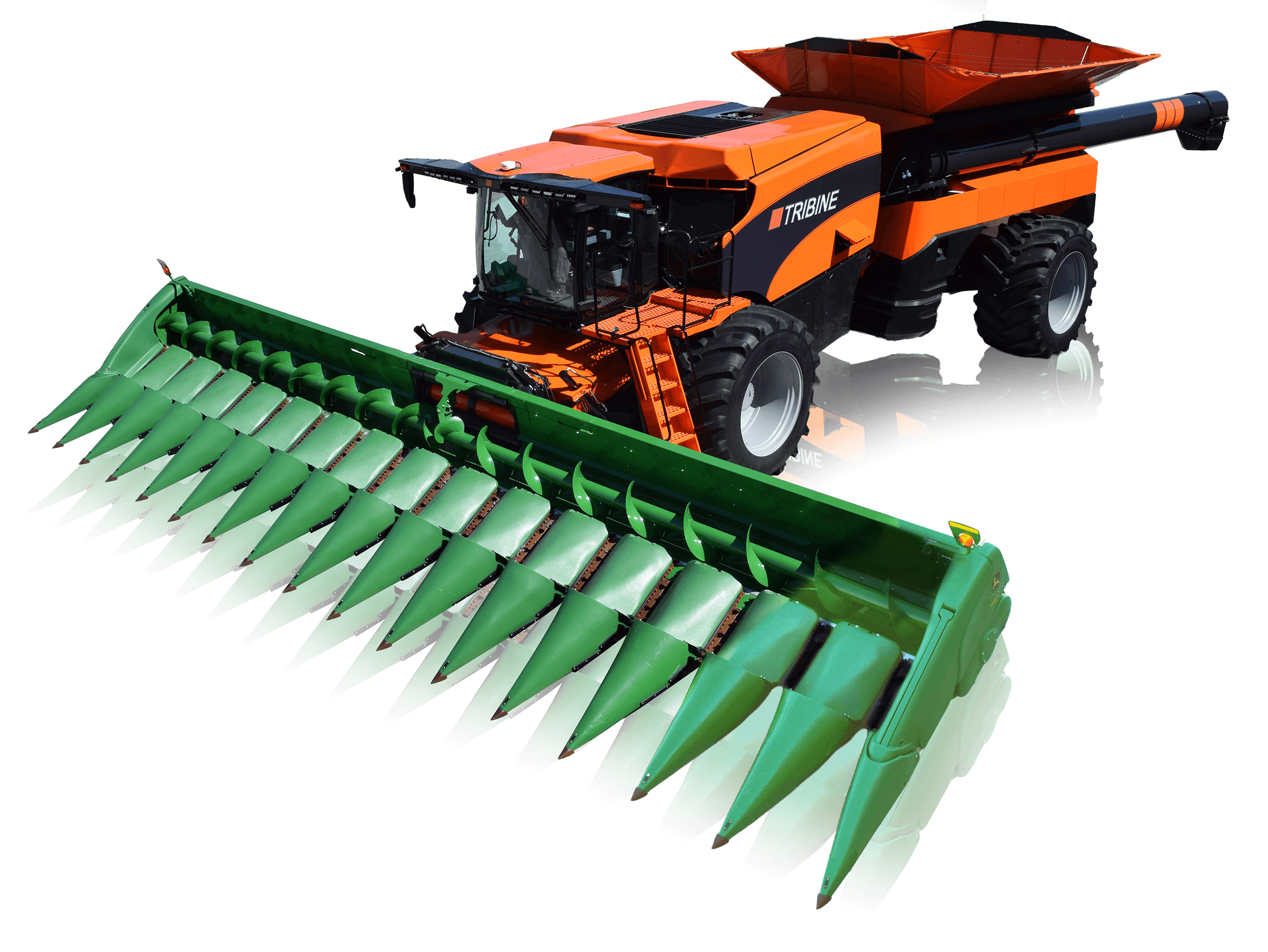
Core Tribine system configured for high-capacity harvesting, grain storage, and unloading.​
Tribine Harvester

Engineering Specifications

(Field-tested architecture. Production specifications subject to refinement.)
  • Grain capacity: ~1,000 BU - approximately double the grain tank volume of many conventional combines.​
  • Engine output: 806 hp class
  • Fuel capacity: ~500 Gallons – extended intervals between refueling.​
  • Integrated high-capacity unloading system
  • Large-diameter flotation tires distribute machine weight across a wider contact area compared to typical combine tire configurations.​
  • Single-operator configuration
  • Compatible with large third-party headers up to approx. 30-50ft (crop dependent)

Mechanical Design Intent

  • Eliminate separate in-field grain cart traffic
  • Reduce machine cross-patterns and compaction during harvest
  • Maintain continuous harvest flow under high-throughput conditions
Compare to Conventional Combines
Performance Highlights
  • ~1,000 bushel grain capacity
  • 806 horsepower
  • Unloading rate: 8.5 bu/sec
  • Reduced soil compaction
Configuration Two

Till-Plant-Fertilize

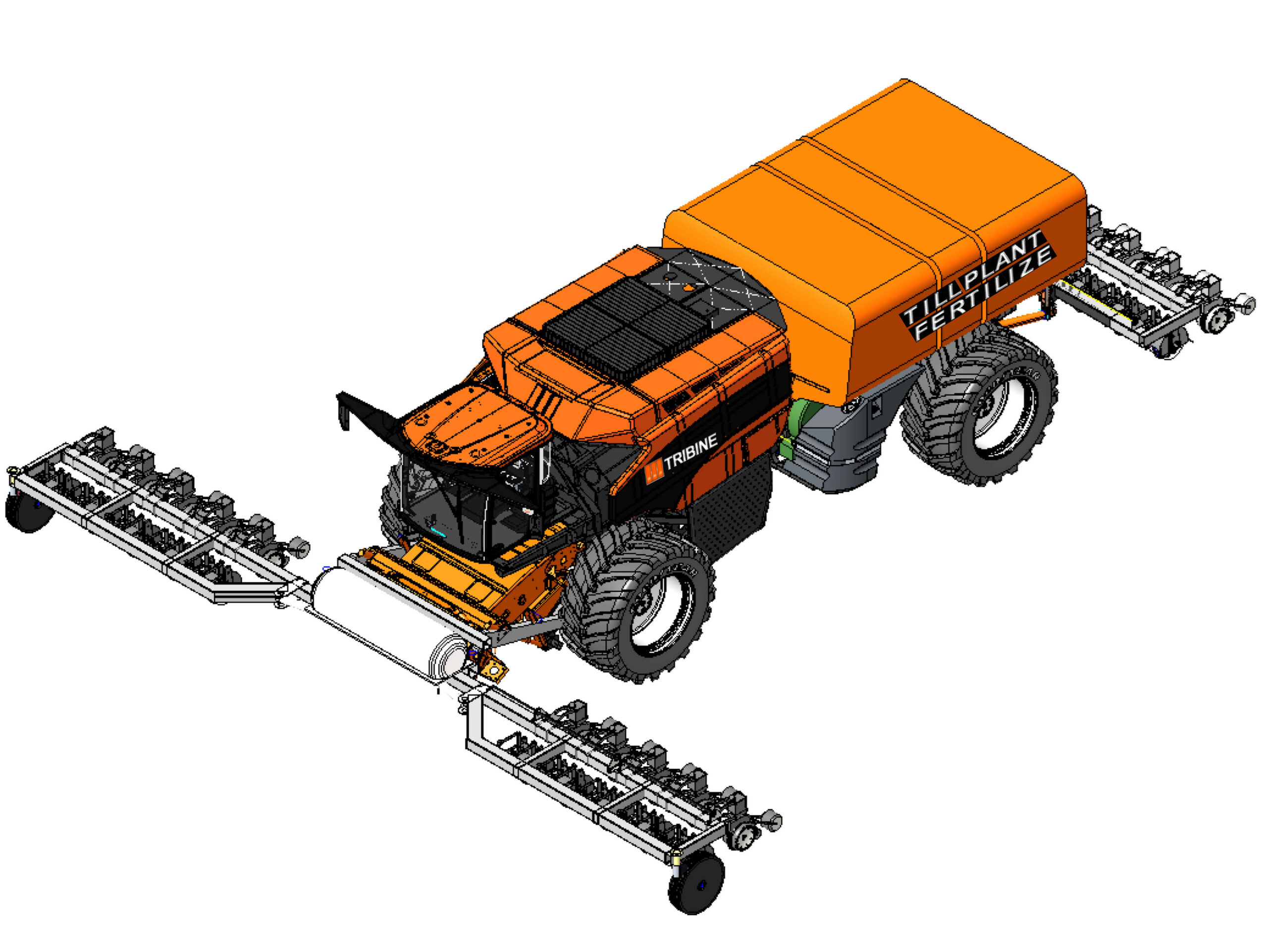
Core Platform + Seed and Fertilizer Module + Integrated Planting System​
Reconfigured to establish the next crop in a single coordinated field operation.
Till Plant Fertilize
Residue Management
Controlled seed-zone processing in high-residue environments.
Seed Placement Environment
Support for consistent depth control and seed-to-soil contact, with 300 bushels of onboard seed capacity.​
Fertility Capacity
900 gallons of starter fertilizer plus 4500 gallons of bulk fertilizer within one coordinated machine​
Field Traffic Strategy
Reduced total machine passes across the hectare.​

Why It Matters in the Field

In large-scale operations, timing and coordination determine outcomes.

Combining tilling, planting, and fertilizing into one configuration reduces the number of separate operations required to establish the next crop.

This supports:

  • Faster field turnaround after harvest
  • Fewer traffic patterns across the hectare
  • Greater control during narrow planting windows
  • Reduced reliance on multiple machines operating in sequence

The objective is operational efficiency without sacrificing stand establishment.

Prototype Configuration

(Multi-season field tested. Configuration evolving.)

  • 4 rows @ 76 cm spacing (30") tested
  • 38 cm (15") configuration in development
  • Integrated seed storage module
  • Separate starter fertilizer capacity
  • High-volume bulk fertilizer tank designed for extended in-field operation
  • Compatible with modern precision row-unit systems

Seed-Zone Residue Processing

Conventional row cleaners mainly remove or move residue and operate only at ground speed, which can limit performance in heavy residue.

Tribine's Integrated Planting System uses powered residue processing that operates independently of ground speed to chop residue and form a consistent seed bed at the operator-selected depth.

The result is more effective seed-zone preparation without full-width soil disturbance — targeted preparation, not conventional tillage.​

Designed for:

  • Double-crop systems
  • Same-day harvest and planting
  • High-residue transitions (e.g., corn to soybean)
Configuration Two

Crop Establishment

Core Platform + Seed & Nutrient Module + Integrated Planting System​
Reconfigured to establish the next crop in a single coordinated field operation.​
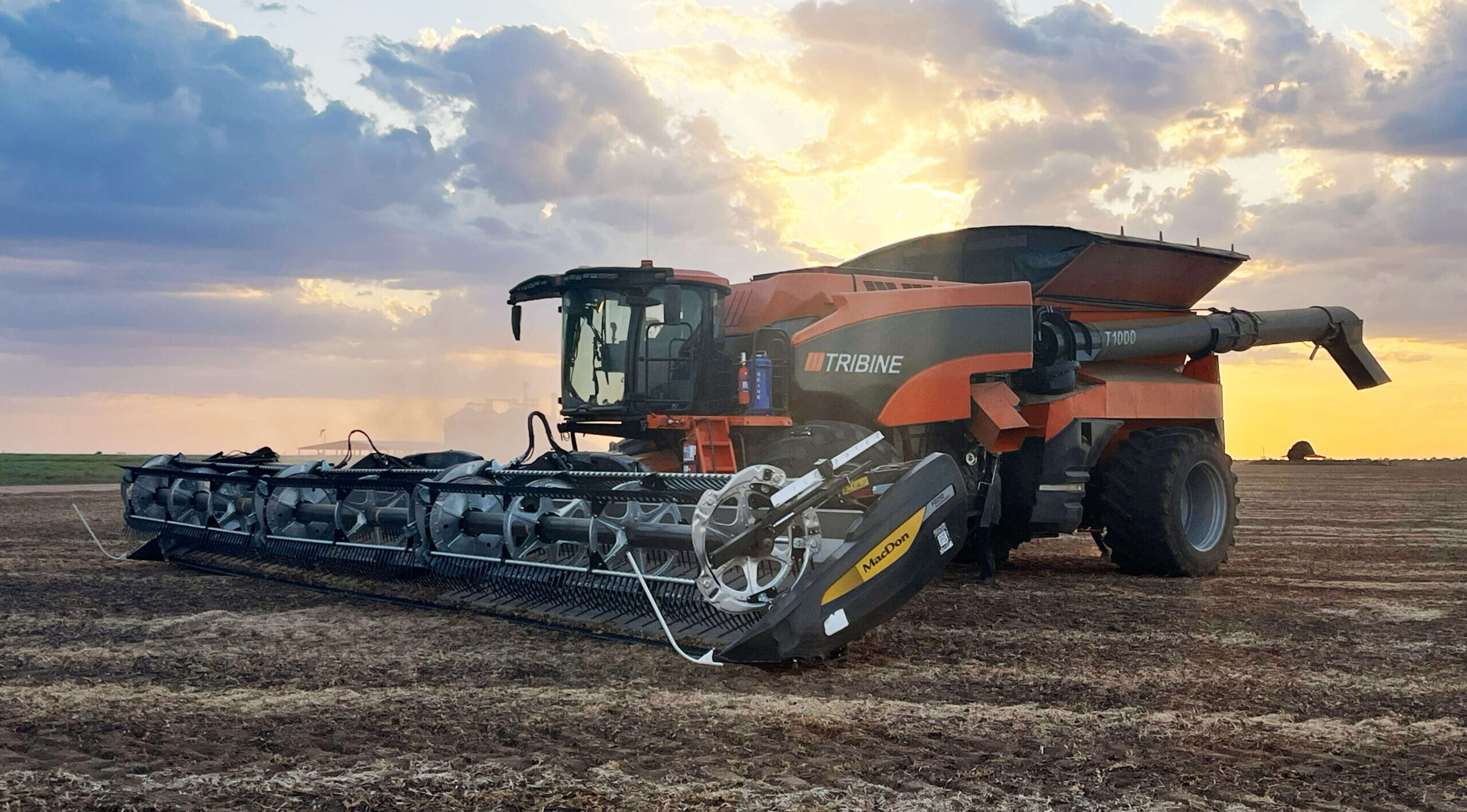
Tribine machine at sunset
Residue Management
Controlled seed-zone processing in high-residue environments.
Seed Placement Environment
Support for consistent depth control and seed-to-soil contact.
Fertility Capacity
Starter fertilizer plus high-volume bulk nutrient capacity within one coordinated machine.
Field Traffic Strategy
Reduced total machine passes across the hectare.​

Why It Matters in the Field

In large-scale operations, timing and coordination determine outcomes.

Integrating seed-zone preparation, planting, and fertility into one configuration reduces the number of separate operations required to establish the next crop.

This supports:

  • Faster field turnaround after harvest
  • Fewer traffic patterns across the hectare
  • Greater control during narrow planting windows
  • Reduced reliance on multiple machines operating in sequence

The objective is operational efficiency without sacrificing stand establishment.

Prototype Configuration

(Multi-season field tested. Configuration evolving.)

  • 16 rows @ 76 cm spacing (30") tested
  • 38 cm (15") configuration in development
  • Integrated seed storage module
  • Separate starter fertilizer capacity
  • High-volume bulk nutrient tank designed for extended in-field operation
  • Compatible with modern precision row-unit systems

Seed-Zone Residue Processing

Conventional row cleaners operate only at ground speed and can be limited in heavy residue.

Tribine’s Integrated Planting System includes powered residue processing capable of operating independently of ground speed.

This improves residue cutting effectiveness without full-width soil disturbance. It’s targeted seed-zone preparation — not conventional tillage.

Designed for:
  • Double-crop systems
  • Same-day harvest and planting
  • High-residue transitions (e.g., corn to soybean)

Prototype Testing

Crop Establishment Testing

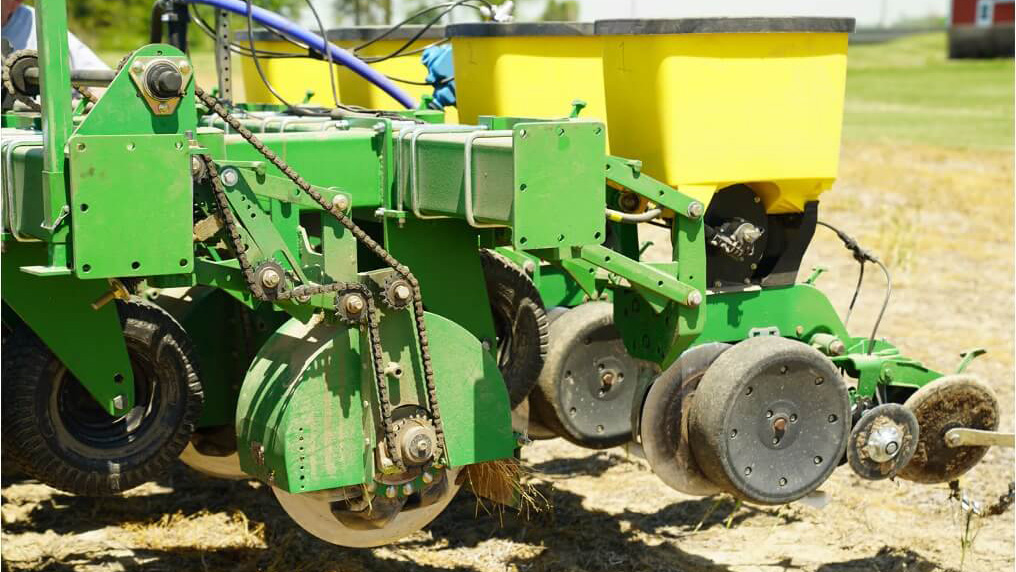
Example of till-plant-fertilize operation directly into a cover crop.​
Till Plant Fertilize
Photo of the till-plant-fertilize prototype

Engineering & Development

Tribine is in active engineering development and field testing.
  • Harvest architecture: Field tested
  • Crop Establishment configuration: Multi-season prototype testing
  • Expanded configurations: In development

Technology & Patents

Tribine’s system architecture and key mechanisms are protected by issued and pending patents.​
View the Innovation
Tribine logo
Tribine is a field machinery system designed to harvest, plant, and fertilize with fewer machines and fewer passes— driving higher farm profitability on large-scale farms.​
TRIBINE is a Trademark of Tribine Industries, Inc.​
Privacy Policy
crossmenu